East Malling War Memorial
To the men of the parish of East Malling who gave their lives in the Great War 1914–1919, and in 1939–1945
The men behind the names
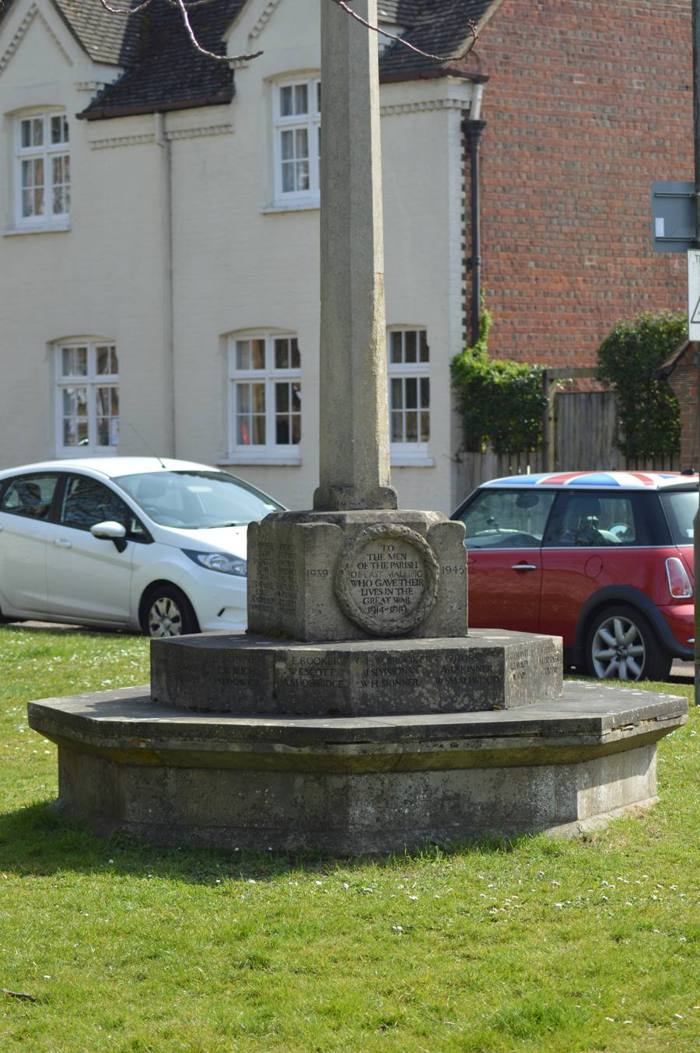
The memorial cross stands on the green at the foot of Church Walk, where the High Street, Mill Street and New Road meet. Its plinth carries the names of the men of the parish who died in the First World War. More names were added to the step below after the Second World War.
This site sets out to tell who those men were: where they lived, what they did, the families they left, and where they lie. Every name on the stone is listed here. Where research has found more, the name is underlined and you can open his story.
Some names still have nothing beyond the letters cut in the stone. If you know anything about any of these men, please get in touch.
- names on the stone
- 99
- with research
- 0
- full stories
- 0
The names on the memorial
Set out as they are carved. Select a name to read what is known about him.
The plinth
The First World War names, cut on three faces of the plinth. The fourth face carries the dedication inside a laurel wreath.
The step
The octagonal step carries the rest of the First World War names, continuing the alphabet from Ruck to Woodger, together with the names added after the Second World War.
A.J. GOODSELL an underlined name has information. Other names are waiting for research.
The memorial
The cross was designed by John Ninian Comper (later Sir Ninian), one of the leading church architects of his day, and carved by the London mason William Drinkwater Gough. Comper designed memorials ranging from the Welsh National War Memorial in Cardiff to many village crosses, several of them carved by Gough.
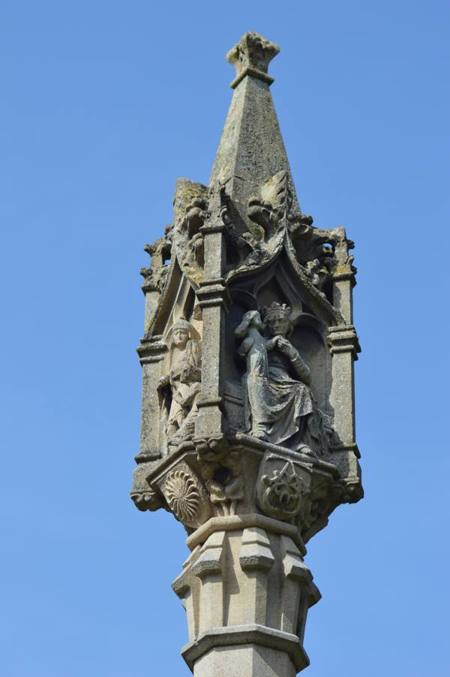
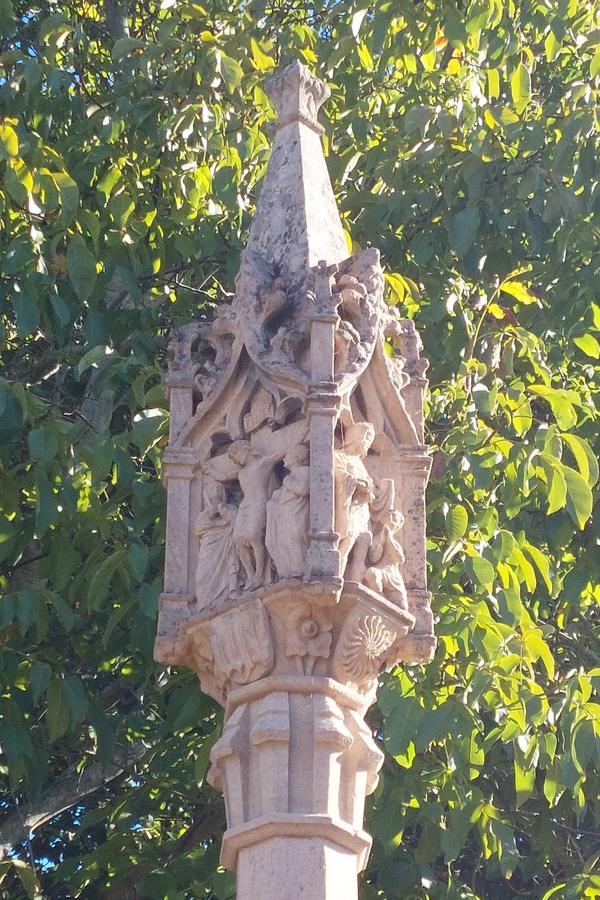
A tall shaft of Bath stone rises from a plinth on a stepped base of Kentish ragstone and ends in a lantern head. Its four carved faces show the Crucifixion with the Virgin and St John, the Madonna and Child, St George slaying the dragon, and St Martin, the soldier saint, sharing his cloak. The memorial was listed Grade II by Historic England in 2010.
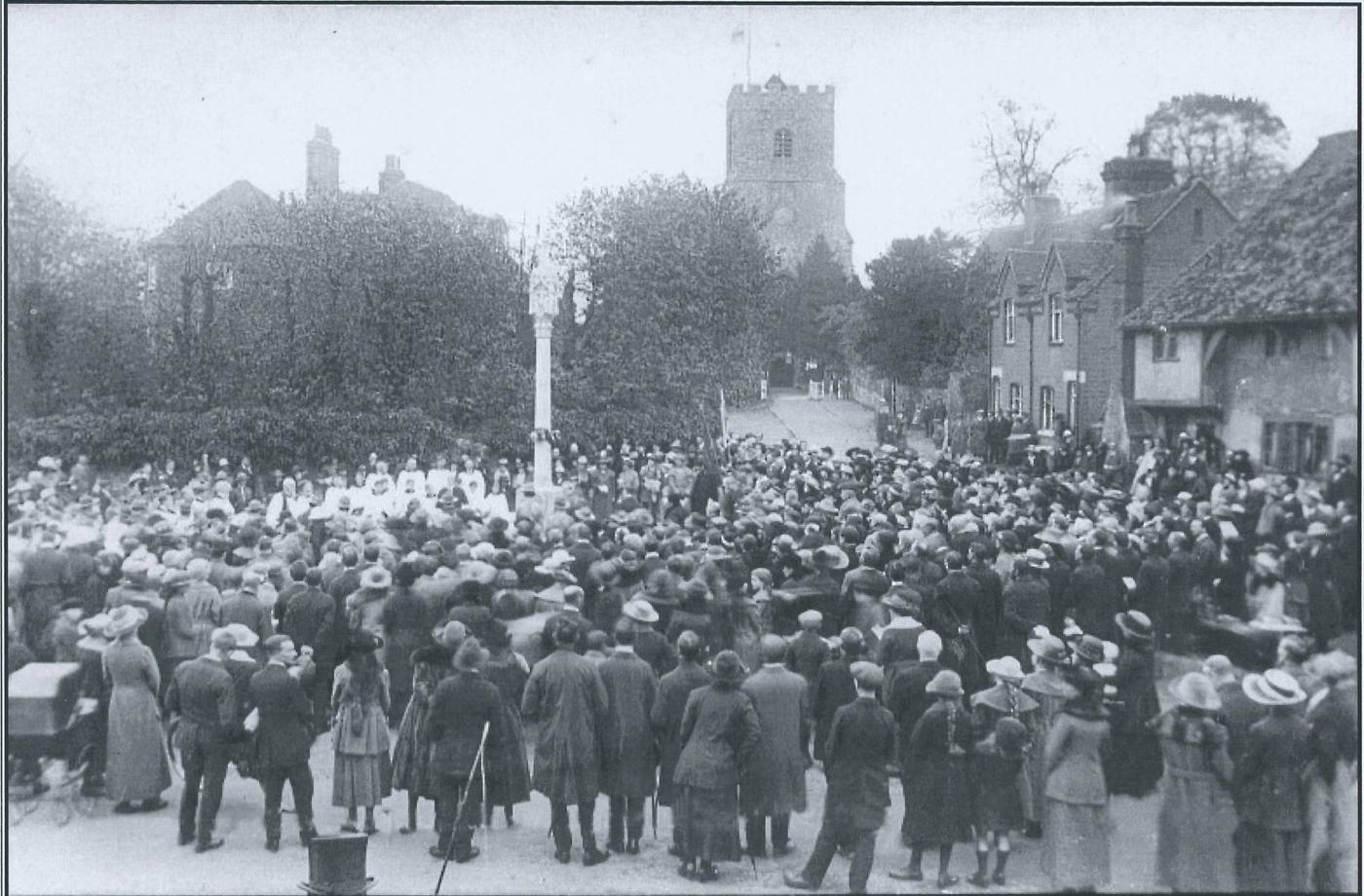
The Imperial War Museum’s War Memorials Register records that it was unveiled on 31 October 1920 by Admiral Sir Doveton Sturdee, the victor of the Battle of the Falkland Islands in 1914. Historic England dates the memorial to 1922, and the photograph of the unveiling is captioned 1919. The register’s date is the most specific of the three, but it has still to be confirmed from a local newspaper report.
Holy Trinity, Larkfield
East Malling and Larkfield are one parish, and Holy Trinity Church at Larkfield is linked with St James the Great, East Malling. The two war memorials belong together. Most of the men on the cross on the green are also remembered in Holy Trinity.
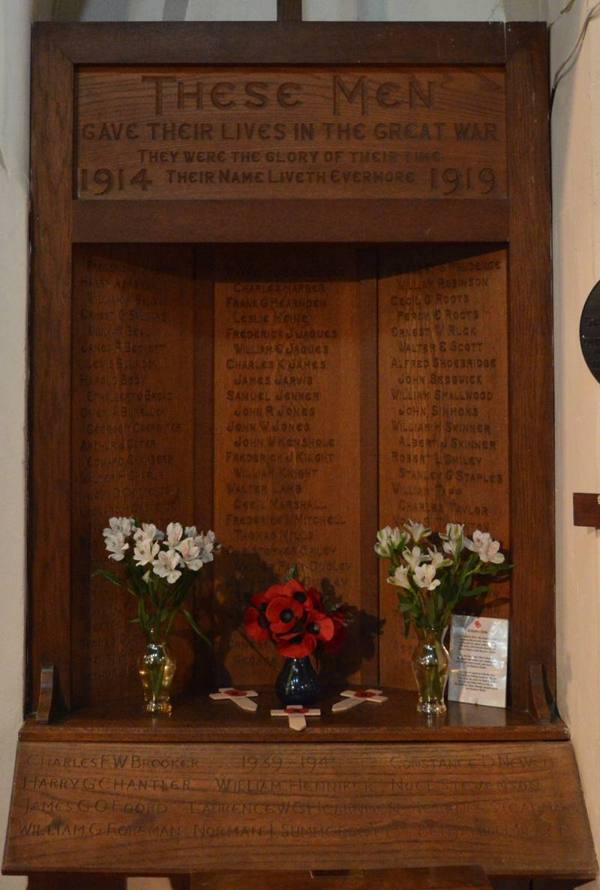
The Larkfield memorial is a carved oak memorial inside the church. Its three panels of First World War names sit beneath the words “These men gave their lives in the Great War. They were the glory of their time. 1914 Their name liveth evermore 1919”. The Second World War names are carved on the ledge below.
The Larkfield memorial gives first names where the stone on the green has only initials, which is how many of the men on this site were identified. Arthur and Henry Wilson and Frederick Williams, listed at Larkfield, turned out to be on the last face of the step, finally photographed in October 2026. Two Larkfield names, Charles K. James and Cecil Marshall, are not on the East Malling cross.
War graves in Larkfield churchyard
Ten men named on the East Malling memorial lie in the churchyard at Holy Trinity, most of them men who died at home of wounds, illness or accident.
About this project
The East Malling War Memorial Project began in 2016 as part of The Larkfield Society’s website, with an appeal for information about every name on the memorial. This new site rebuilds that work and brings in the research gathered at the time.
The research draws on the work of the Larkfield Holy Trinity Church War Memorial Project and its volunteers, including Sarah M’Grady, Maria and Peter Knight, Sheila Chessman and Jane Grooms, and on family papers shared with the project. Sources include the Commonwealth War Graves Commission, the 1891, 1901 and 1911 censuses, service and pension records, the Army Registers of Soldiers’ Effects, medal rolls, war grave registration reports, and the Historic England listing. Photographs of the memorial were taken in April 2016 and, after the lettering was renewed, in October 2026.